By Kieron Gillen on September 28th, 2010 at 5:25 pm.
Spoilers have been on my mind. Not the Darth Vader is Bruce Willis in the Sixth Sense way, but whether the way we think about and talk about spoilers in reviews are actually appropriate for the form. In short: we spend a lot of time debating about things which barely affect our experiences at all while tearing other things free from the still living torso of a game which absolutely alters what everyone who reads then plays takes away. The first question I’m wondering is “why is there is this double-standard?” The second question “is there anything we do about it?” And the third is “should we”?
For those who’ve never read a comment thread, the sort of spoiler which is always debated are the plot based ones. This causes problems for reviewers, creating a dilemma of how much to talk about the games’ specifics when discussing its narrative. You walk a series of lines. You’re careful about showing screenshots of baddies too far into the game (while simultaneously trying to get grabs far enough into it to show you have actually played the thing). You’re careful to choose the smallest specific examples to illustrate larger themes, a couple of willing spoiler-sacrifices to make sure something is properly illustrated (To look at the previous Planescape piece, choosing a couple of vignettes and the ability to defeat the end of game boss by talking). Your plot synopsis is kept at the high level (themes, structure, etc) or – if dealing with specifics – limit to the level of the back-of-the-box synopsis and initial set up. You’re also aware that some people will always be over-sensitive to this, and roll with the punches when they choose to throw them.
But for all but a handful of games, the plot’s complete gibberish. Who gives a fuck what happens to Princess Pooble’s forbidden love in the kingdom of the mushroom racers? The game’s about the mushroom racing. Which makes me wonder… why are we so happy to let a review destroy the mushroom-racing?

Let’s give an example. It’s the one which started me actively thinking along this line. It’s Anthony Charles’ review of Amnesia over at Beefjack. And it’s a perfectly fine review. All my peers and I have written reviews of similar character. But one bit stood out, when discussing your failing sanity in game…
(And, to state the obvious, some of the following are going to be what I’m going to start calling a “mechanic spoiler”. Spoiler!)
The effect is similar to how many other games simulate inebriation, and it works to heighten your sense of vulnerability. However, in the course of my play through I never once died, directly or indirectly, from insanity. It’s even questionable if being in a lowered state of sanity is any hindrance at all. At some point towards the middle of the game, the effects of insanity start to feel like all bark and no bite.
This is true. I never once died from going mental apeshit in Amnesia. I suspect you didn’t either. However, the game at its best, for those opening four hours, you were unaware of that. You were afraid of the dark. You were excited by the possibility of your eyes bleeding and biting out your own tongue while crouching in a darkened corner. However, if you’ve read the review, you’re pre-armed that it’s a paper-tiger. You will be less afraid having read the review. The game will be considerably less effective.
However, let’s push it an inch further. Can you actually die of insanity in the game? I’m not sure if you can. Part of me actually suspect it is impossible to die from fear, and it’s a lie to increase tension when hiding in a darkened shadow. The eye-distortions are problem enough without actually just having the player keel over. For the sake of argument, let’s assume that’s true. You really can’t die from fear.
In which case the question becomes – do you mention it? Because it strikes me as going to a magic show and reviewing it, explaining how every single trick was pulled off. Reviews as a buying guide are, at their best, about giving you the information you need to decide whether you want to buy the game or not. And me revealing something that makes the horror game openly less compellingly scary strikes me as much worse than revealing the dark secret that lies in the bottom of Amnesia’s dungeons. That narrative spoiler is a minor thing to breaking the whole game.
It’s a spoiler, but not as we know it. It’s a mechanic spoiler.

There’s another problem to this. We’re judging whether the game is any good. That the card-trick illusion falls apart half way through the game makes it undeniably worse, and if we’re reviewing it, we have to include it. But how? I suspect reviewers, in a standard review, could do with being a notch more elusive… but the second you don’t put an example, the point becomes foggy and easy to dismiss. But the second you do put an example, the game is hurt. Let’s choose another recent review, from Comrade Walker’s Mafia II Wot I Think.
But evasion is ridiculously simple. The easiest trick is to brake to a halt, wait for the cops to get out of their car, then drive off. You’ll lose them in five seconds.
I’ve just played through Mafia II, as I wanted to chew it over for something else I’m planning on writing. But every time I got in a police chase, from the first time, I find myself thinking “shall I just do the stop-pull-off trick?” As bad as driver AI is in Mafia II, reading John’s review made it worse as I didn’t even have to figure it out for myself. Learning a game’s limitations and flaws is actually part of the pleasure of a game. When you don’t entirely grasp the model a game uses, it’s more alive than when you’ve processed the simple rules beneath it. Saying specifically the limitations transforms the review into a walkthrough, and supplants the players’ own experience. We should strive to explain the games’ faults without ruining others’ experiences with it. Easy, right?
No. It’s not that easy. I’m not sure I wouldn’t have written exactly what Walker wrote. It’s a small example which illustrates a larger point.
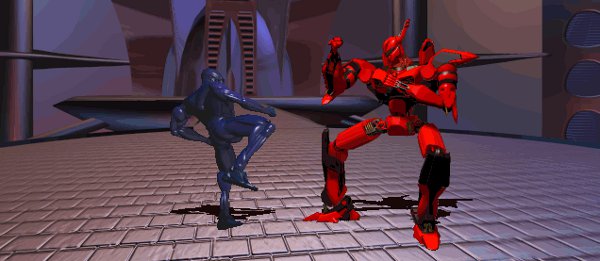
Let’s choose one of the most famous mechanic spoilers ever. In Rise of the Robots, the 90s fight game rusty abomination, you could famously complete the game on most difficulty settings by holding the joystick up and to the right and holding down the attack button. That is an absolute cast iron proof of why the game’s remembered as a laughing stock. It’s just broken. It’s also a game which was terrible in lots of other ways, but as a single example, that sticks in the mind. When a game is that bad – and Rise was a 5% game if there ever was one – such absolute game-annihilation spoiler is surely merited.
Okay, let’s go a bit more borderline.

Empire: Total War.
It got quite a few good reviews – including, for shame, one of mine – until someone realised something: on release, the AI simply can’t “do” fleet invasions. For a game based in the age of sail, that’s fucking fatal. The computer couldn’t play the game you were playing.
The problem is… well, as a conquering, exploration and general piece of atmosphere, the game kind of works. You can go and fight battles and conquer the world. There’s a reason why the first reviewers didn’t notice it, and it’s because they’re just one mind playing a complicated game. When released, an enormous net-mind of gamers were put on the task, only one of whom needs to actually notice something for everyone to notice it – because they post on the net, and the cat’s out the bag. And the game becomes instantly worse for everyone who hasn’t noticed it yet. It’s a total mechanic spoiler. It’s almost impossible to play Empire after you’ve realised it, even if you were digging it before. And it was possible to dig it before…
Still, you’ve got to say that one, yes?
All of which goes around my head and makes me drum my fingers on the table for far too long. I haven’t got a hard, correct solution to this one. I’ve just got a few rules of thumb which I’m going to try and include in any review I write from now on. They’re a little like the rules for more traditional narrative spoilers. The sooner a problem in the game is visible, the more justified you are in exposing it. The further into the game it comes to light, the more I’ll try to soft-foot around it, making sure that the problem is noted without saying how to actively exploit it. Equally, the more likely anyone will want to play the game is – as in, it’s acceptable-if-iffy Mafia II rather than heinous-and-hateful Rise of The Robots – the more I’ll go soft and choose a less game-influencing example. And if the flaw fundamentally breaks the game rather than just reduces its appeal – as in, Empire rather than Amnesia – it has to be exposed. Is it a flaw which the game lives through or dies by? If it dies, you’re justified in killing it And all the while, you’re aware that if you reveal too much, you’re spoiling the game, and if you reveal too little, you’re leaving yourself open to accusations of just missing stuff.
Man! Reviewing, eh? I’d rather be back on the building sites (Note to Prod – Please check this – Ed).

That’s all I’ve got. Except the reason why this isn’t something which is in common discussion is obvious – narrative spoilers are an idea which are common in the wider society, and applies to all narrative media and a few non-narrative non-media (e.g. Sports matches). Mechanic spoilers are the number one way a review can hurt someone’s own experience of the work, but they’re unique to games. They’re our problem, and ours alone. So we’ve got to find a solution, or at least find a sensible way at looking at them.
Yeah. Tricky. I suspect one line we could draw between criticism and reviews is that the former is basically for people who’ve played the game and the latter is for people who haven’t. As such, the hardest of the mechanic spoilers should form the core of criticism. If you’re writing a buyers guide, I’ll urge writers to bear in mind – if only in a passing thought – that people still have to play the game after reading your review.


28/09/2010 at 17:34 Lambchops says:
Mechanical spoilers for Amnesia ahead (nothing further than what was already in the article though).
It took me right until the end of Amnesia (more or less) to figure out that you couldn’t die from insanity. The game had been so effective into whipping me into a state of paranoia i’d be lighting candles everywhere or if going low I’d speed through areas as quickly as I could to stop it draining. As this proved quite effective I never found myself hitting the bottom of the insanity guage until right near the end (where it’s pretty much unavoidable no matter how paranoid you are). If I had known this before I played the game it would undoubtably have been a less rewarding experience.
However just like narrative spoilers some responsibilty lies in the hands of the gamer to avoid them. For example I know fine well there will be mechanical spoilers in videos of Portal so as a sesult I’ve not watched them and indeed as soon as I heard the word “gel” I stopped even reading atricles about it. I want to find out for myself and I can easily take steps to ensure I do by avoiding reading about Portal. Of course things are not so easy when you’re not already 100% certain you are going to buy the game.
28/09/2010 at 18:14 Rich says:
Never played Amnesia, and I’m probably not going to (I can only afford so many pairs of pants), but I did have a similar experience with Theif 3.
Throughout 3/4 of the game I honed my lock picking skills, including working out how long I needed to pick the lock and how long it would be until someone rounded the corner. With a bit of concentration I could find the sweet spot on the hardest locks in no time, but it was still nerve-racking to wait for the click and then on to the next tumbler. THEN, I found out you could click to finish a tumbler immediately. What that meant was you only had to find the very general area around which the tumbler starts to move, click wildly, and you’re in.
28/09/2010 at 18:15 Rich says:
Oh yeah, and I don’t think the Cradle would be the same the second time around, knowing there’s only about 3 or 4 baddies.
28/09/2010 at 18:51 SheffieldSteel says:
Rich, I had the same experience in Thief. When I realised that the hotspots were all multiples of 90 degrees (or 45 degrees for “uber-hard” locks), the fun was gone.
28/09/2010 at 19:54 Cael says:
Speaking of Thief 3, I read about killing undead with flashbombs in a review before playing it and was happy to have a way to kill them.
28/09/2010 at 22:08 Chiller says:
I wonder what made people think they could die from insanity in the first place…
I hit the insanity cap pretty fast in one of the first areas of the game, myself, so of course I knew that it won’t kill you (although that was never a concern). But then, funnily enough, it did end up killing me as it happened again later just as a zombie was heading my way. Oh well, one respawn later and I was on my merry way again. It’s not like (SPOILER) zombies are really a true danger anyway, the game is all about (scary) smoke and mirrors.
I still dislike the insanity mechanic just as much as I did in Call of Cthulhu DCOTE.
29/09/2010 at 13:52 jsdn says:
I’m pretty sure I can’t play Amnesia ever again. One of my talents (and curse) is to deconstruct game mechanics, and I did it pretty early on in Amnesia. For that reason I don’t mind if it’s explained in a review, because I would have found it anyway. I don’t mind if a game is stated to resemble a barbie doll when the proverbial skirt is lifted on game mechanics. It’s an issue like any other.
12/10/2010 at 15:42 Andy says:
My issue with mechanics like Amnesia’s insanity meter is that I’m a terrible perfectionist.
My need to keep the gauge from falling too low isn’t that I’m worried about the in-game result as much as I would think I’ve failed in the standard I like to set myself whilst playing a game.
This has awful side effects sometimes where a ‘failure’ is a scripted part of a game’s story. The first example that pops to mind is just at the point in Far Cry 2 when the maps switch over and you find yourself in a desperate shootout. Turns out it’s impossible to get out of there without being ‘killed’ but I must have replayed that section 50 times trying to do it ‘better’!
28/09/2010 at 17:41 Maxheadroom says:
I once attended a super hero themed house party as “Inadvertant Spoiler Man” and wore a costume consisting of a cape, a mask and a T-shirt with all of the spoilers in the top pic and a few others (“Soilent Green is people!” etc).
I didnt pull
28/09/2010 at 17:42 Matt says:
Very interesting article. After playing Empire happily for several hours, I happened upon the sea invasion thing in a forum, and the game’s been pretty much ruined for me since. It’s quite likely something I would have never noticed, or at least not have noticed until after enjoying it for a few dozen hours on my own.
28/09/2010 at 18:29 Ateius says:
Is that really the big complaint – naval invasions? I’ve been avoiding Empire for years because of all the virtriol and hatred spewed at it, but it’s really at the core just naval invasions?
I’ve played Medieval, Rome, and Medieval II, and I’ve NEVER seen the AI pull off a naval invasion. Hell, most of the total conversion Rome mods add the ability for armies to just walk across narrow straits (sicily-italy, gibraltar, etc) because of this, something that Medieval I and II had as well.
I’ve played against amphibiously handicapped AI for nearly a decade. I’m pretty sure I can stand it in Empire as well. Maybe it’s time I finally picked up a copy.
28/09/2010 at 19:37 JonFitt says:
Most versions of Civ have also had the AI only able to perform the lamest of combined attacks or naval invasions.
But at least there was the off chance that they’d do something. I guess now I know that Empire has none, there’s no point even watching out for it.
28/09/2010 at 19:39 Matt says:
There were other complaints, such as native Americans marching in formation, but the naval invasions was the big one I think. The lack of naval invasions in Empire is much more conspicuous than it was in previous TW games because Empire was the first game that actually included real naval combat. It was one of the big selling points of the game at the time. I believe they eventually patched it in, but I haven’t had a chance to see how much of a difference it made. As Kieron says though, it’s one of those things that you can’t not see once someone has pointed it out to you, no matter how hard you might try.
29/09/2010 at 06:44 thebigJ_A says:
At least they fixed it.
…like 6 months later…
06/10/2010 at 22:57 jalf says:
Depends on who you ask. Naval invasions is probably the one big issue that people can agree on.
Then there’s the usual group who consider the fact that it’s not moddable a capital offense, and there are people angry at the missing multiplayer campaign, and people disappointed in the frankly lousy battle AI.
But naval invasions was a pretty iconic issue because, for the first time in a TW game, the naval aspect was *important*. (And as others have mentioned, it has been fixed since then. In my most recent game, Spain conquered Scotland, and Sweden took Sicily, and Russia landed a full stack of troops just outside London (which sucked since it was my city)
To be honest, I’ve always had fun with ETW. I found out about the naval thing fairly late, took a break from the game, and picked it up again when they released the first patch that was supposed to fix it. Been playing it on and off since then, and it’s really not a bad game, if you can live without mods.
28/09/2010 at 17:42 LewieP says:
Of course the total flip side to that is that mechanic spoilers could very easily improve someone’s experience of a game.
I know that there are games out there that after having read a review highlighting certain elements as being especially interesting/good, I have made sure to check those out, and enjoyed the game as a whole even more so because of the spoiler. (eg: “make sure to check out the dark brotherhood quests in oblivion”).
28/09/2010 at 17:44 Kieron Gillen says:
I didn’t have time to go into that, but the idea of a review which helps “unlock” the game is really interesting and useful.
KG
28/09/2010 at 18:06 Xercies says:
Yeah. mass effect, i guess the gender change could be considered a mechanical spoiler. But John Walkers review i had a lot more fun as a femal because he said play a female then i would of if I played a standard male because i played a male later on and i thought “Yeah john was right there”
28/09/2010 at 19:06 Rii says:
A while back there was an interesting story linked here regarding the correlation between reading positive/negative reviews of games and the subsequent level of enjoyment derived therefrom. The thrust of the article was, as I recall, herd mentality, but there’s another explanation available: in that better reviews (positive *or* negative) will often nudge you in the direction of noticing certain elements of the production.
One recent example which springs to mind is No Country For Old Men, a film which I didn’t even manage to get through on my first attempt a couple years back, but which – having subsequently read reviews of the film by Ebert and others – I’ve now watched four or five times and gained new appreciation for upon each viewing.
28/09/2010 at 19:22 Xercies says:
The opposite can be true though, many really positive reviews i have read playing the game/film in actually i keep thinking why is this game/film so great was the reviewer playing the same game i was.
Twice this has happened to me, one of them was a film and it was Blade runner. Seriously the positive reviews i think coloured my opinion of it I thought intially it wasn’t as great as people said it was. After a few viewings without the hyperbole in my mind I began to appriciate it.
The second one was far Cry 2 and i still to this day do not see what the positive reviews of the game saw. because to me its probably one of the worst and most dissapointing games I have ever played.
28/09/2010 at 19:29 bob_d says:
I’m not even sure your example is a spoiler, but if it is, it’s a “play experience” or “content” spoiler rather than mechanics (same with the gender choice in ME). It’s hard to think of mechanic spoilers that do anything other than short-curcuit exploration of the game itself (as opposed to the game world or content). The only positive spoiler I can think of would be one that allows players to by-pass broken bits of the game (certain mechanics might not work, but others do). That requires a game that’s fatally flawed in very limited ways, but yet worth playing overall.
This is a very interesting and long overdue discussion. As a designer, when considering game systems I give thought to how obvious or obscure each mechanic is to the player, and what sort of gameplay one can get out of discovering the mechanics of the game itself. Discovery-based gameplay in general is problematic enough in the Internet Era; having key mechanics given away in reviews before the game even comes out adds a whole new complication. Players can simply not seek out peer-spoilers if they want to explore the game for themselves, but reviewer spoilers are harder to avoid.
28/09/2010 at 20:30 NAJoe says:
Two POSITIVE spoilers for game mechanics I can think of are: playing on casual difficulty in Red Faction: Guerilla and knowing to look out for ammo in Transformers: War for Cybertron. Playing on normal or hard difficulty in Red Faction makes the combat so difficult that enjoying the destruction is almost impossible and it is easy enough to miss ammo in Transformers that not being told explicitly to watch out for it could lead to frustratingly running out of ammo.
Regarding narrative spoilers, I feel that the only narrative spoilers to truly avoid are the BIG TWISTS (say in Bioshock). Anyone concerned about knowing that there are goblins on level 3 or that you can get a SCOPED AR-15 is an idiot (and I will fight them). Having said that, I knew all the big twists before I played Bioshock and it was still a great experience (once I got past the clunky gameplay).
28/09/2010 at 22:58 VelvetFistIronGlove says:
Along these lines, I’m actually contemplating buying and playing Amnesia now this “mechanical spoiler” is known to me. I tried the demo, and the combination of it being too scary for my wussiness and an intolerable difficulty in finding enough oil and tinderboxes to keep my lantern alight or light torches put me off it. Now that I know that darkness alone and the resulting insanity won’t kill me, I’m more of a mind to play it after all.
28/09/2010 at 17:45 Richard Beer says:
I suppose there is a dichotomy between the spoilers that ruin the story/immersion/psychology of a game, and the spoilers that point out bad game design.
Ever since I went to see From Dusk Till Dawn in the cinema having read NOTHING about it, only to be totally “WTF!” about the sudden change from Tarantino-esque crime movie to vampire movie, I’ve really appreciated the power of ignorance. Many is a book or film whose power is amplified when you approach it innocent of twists, tricks or even plot details. I frequently refuse to read the back of books I pick up these days, because clearly the publisher has decided to prioritise sales over suspense by splashing all the good bits over the back to entice purchasers. It’s difficult to blame them.
But back to games journalism. If you’re talking about a game like Rise of the Robots, where a spoiler affects nothing more than tactics, go right ahead. You’re not breaking immersion. You’re merely pointing out flaws that the developer should fix.
If you’re talking about a game like Thief, don’t tell people what happens in The Cradle.
Essentially, as a reviewer, you have a responsibility not to deprive your readers of the awe or sense of wonder you yourself experienced when that plot twist you loved caught you unawares. You must not destroy the suspension of disbelief that a good game creates. You must not take away the intake of breath prompted by the sudden realisation that The Nameless One has done this all before a hundred times.
To do so would just be selfish.
28/09/2010 at 18:55 SheffieldSteel says:
It does beg the question though: Where do you draw the line? I mean, is the insanity in Amnesia an essential part of enjoying the game and that we should therefore say nothing about, or is it a broken mechanic that needs fixing, hence exposing?
29/09/2010 at 16:26 Malibu Stacey says:
I do the exact same thing as you Richard but with movies & games as well as books & my friends think I’m crazy. They’re all like “OMG have you seen the trailers for movie x” & don’t understand why I keep away from stuff like that as much as possible. Then we go to the cinema & see movie x & they’re like “meh they’d shown most of the interesting bits in the trailer” while I’m thinking the movie was quite enjoyable. Replace movie with game or book & trailer with review where appropriate.
Personally I see nothing wrong with copious spoilers in reviews. It’s a review, it’s meant to talk about the subject matter. If you’re reading it you should be prepared for the fact that your judgement of the product being reviewed may be changed after you finish reading the review. That’s the entire point of a review & there’s nothing forcing anyone to read reviews unless I’ve missed some scientific discoveries recently.
29/09/2010 at 19:41 haircute says:
@Sheffieldsteel
Most likely no one will see this comment but I just wanted to correct Sheffieldsteel regarding his usage of the phrase “begging the question”. Please follow this link:
http://begthequestion.info/
28/09/2010 at 17:46 brog says:
This is an interesting topic to consider as a maker-of-games as well. If I make a game with a cool new mechanic, do I tell all about it to advertise what’s interesting about the game (hopefully getting more people to play it), or do I leave it as a mysterious system to experiment with and discover (hopefully giving more satisfaction to those who do)?
28/09/2010 at 17:47 Radiant says:
It’s not so much that reviewers should be elusive about the games details it’s that they need to be more lean with the review itself.
Reviews should go like this:
Plot’s good/shit/it’s a puzzle game.
Game’s shit/good here’s why. blah blah.
It’s not as good as/better than this *other game* it takes most of its cue from.
With bits of humour sprinkled in.
A good review shouldn’t even have the space for spoilers.
Leave the war reporting for after the games been thoroughly played through/over looked.
28/09/2010 at 18:11 jeremypeel says:
I see your point, Radiant, but you’re ignoring the need for minor spoilers as examples to prove why the game is good or bad, that’s why there’s an issue here. And you have to admit, your formula doesn’t sound hugely entertaining.
28/09/2010 at 18:41 Radiant says:
But then you hit upon the golden rule of reviewing:
If it’s dead: Kick it.
If it’s alive: Water it.
If the game is broken as Empires is then say so.
But if it’s not noticeably so as in the case of Amensia then it’s best to keep it in your pocket.
A review should ideally be about a page long.
If it’s a notable game [for which ever reason] then do an additional separate feature on it.
28/09/2010 at 19:31 jeremypeel says:
Yeah, the dead or alive rule seems sensible.
I’m not sure I agree with your review guidelines though, but that’s not an issue with you; it stems from a more deep-seated confusion in gaming culture as to what a review should be. Obviously you sit on the side of having a review be a buyer’s guide, pure and simple, and there are clearly very good reasons for that.
On the other hand though, I count a number of game reviews amongst my favourite pieces of writing ever, and I certainly wouldn’t like to see PC Gamer’s reviews become any less involved with game specifics, outside context and everything else that comes with entertaining reviewing than they currently are. I read about a lot of games I will never play, and am entertained in the process.
28/09/2010 at 19:40 AndrewC says:
What is broken? When games are called irrevocably broken for the tiniest of things, or just for design decisions that the particular shouty-person disagrees with?
Your approach seems far too close to the idea of deliberately ruining a thing you don’t like, and other acts of deliberate cultural vandalism. The spoiling of Lars Von Trier’s Antichrist is a recent example. It happens all the time.
28/09/2010 at 20:11 Radiant says:
@AndrewC
Broken in the same way as the examples I gave.
It’s purely subjective to the reviewer and that’s the reason you buy/read one mag/website over another no?
@jeremypeel
Did you read any of the recent reviews of Halo Reach?
Those things were sprawling for sprawling’s sake when the only thing anyone really wanted to know was A) Is it any good? and B) is it better then the abysmal ODST?
You can do wonderful things within a given structure.
Take this for example this website ‘audits’ movie stars.
It rates then alongside other movie stars:
2001 review of Guy Pierce
http://www.fametracker.com/fame_audit/pearce_guy.php
That for me is a perfect review. Doesn’t even have pictures.
28/09/2010 at 17:48 Thorin says:
I’ve always had a problem with mechanic spoilers in open-world games — one of which was Fallout 3. To be fair, the spoilers come from both reviews and the game itself (loading screens inform you that you can pickpocket and place a live grenade or mine on a character, a fact I would have much preferred to find myself). The largest of the these was revealed by both Bethesda and the reviewers though: blowing up Megaton. This mechanic is one of the biggest things about the game — and the stupid thing was revealed by countless places like a marquee example of “wot is game” — why not let players figure that out on their own? Why not use another, smaller example if you need to showcase moral choice? I would have loved to discover that on my own, it would have made a great game a million times better. So really, it’s not just about what’s wrong with a game, and how to exploit it — but also what makes the game great that matters.
As far as a solution? I don’t have one, but I think you’re right, there needs to be one, but developers need to let people discover them on their own too. Achievements have ruined this a bit, but reviewers can do just as much harm. The problem is that the mechanics are generally the selling point of a game, so we’re forced to talk about them in the same way we’re forced to talk about he structure of a book or the cinematography of a movie, they’re intrinsic to the experience — perhaps if we don’t reveal the key aspects, the big shots, the main course, we can avoid spoiling the thing that makes these things we call video games interesting: discovering things for ourselves.
28/09/2010 at 19:12 Walsh says:
I would’ve never known about the live grenade thing unless it was pointed out. Tips like that are added if the developer felt like no one noticed their nice little feature during play testing.
28/09/2010 at 17:49 Astalano says:
I’m pretty sure insanity just makes you more detectable by monsters, same as Penumbra.
28/09/2010 at 17:49 Redd says:
Keep doing what you do.
28/09/2010 at 17:51 Tom Armitage says:
I have long believed in mechanical spoilers – for instance, the Planescape one you describe. I mainly don’t approve of spoilers of mechanics that are purposefully withheld from the player until after certain progress. For instance, Adam Atomic’s Fathom is something that’s a bit difficult to talk about.
But:
I don’t believe reviews are, necessarily, buying guides. Most are, but I don’t think it should be assumed they are. Given that: sometimes, I’m often intrigued to see how mechanic (X) can be worked into a game. Knowing the weird rules and systems that might later emerge are precisely why I’d buy a game. (I must admit: I am more interested in games-as-mechanisms than games-as-stories; similarly, I don’t mind most spoilers for movies because I’m more interested in how things play out; knowing what happens doesn’t tell you how it’s going to happen, which is the far more interesting aspect of both narrative and plot). And once you’ve played, for instance, Fathom, you want to talk about it. I would be sad if a review of that game didn’t criticise what happened. There are ways to write about this without descending into and then this happened and then that happened and everything is different.
I also don’t think John’s Mafia II example counts as a spoiler. That’s not a system being revealed; that’s an interaction between player and system being exposed. It might not be a desired one – how often do reviews talk about interesting bugs? But it’s dangerous to suggest that the interaction between player and system is also verboten, as it makes it difficult to talk about subjective experience. Also: it’s not like driving is a mechanic exposed over duration; it’s a core part of the game, exposed at the beginning. The problem John found is an implementation issue.
To be honest, I think being aware of the problem and having a stance on it is a good starting point – either as a reader or writer/publication/editor. So many people let mechanical spoilers pass but hate having stories – be they in books, movies, or games spoiled for them. If you’re going to be prissy about that, you should be prissy about being told you can kill final bosses in Planescape with your voice, or that you’ll be granted power (X) at point (Y) in title (Z). Of course, this is rare.
I agree that you can spoil games through revealing their mechanics/systems inappropriately; I don’t agree that describing interaction with systems necessarily spoils a review. It also makes me sad that we still exist in a landscape where the notion of mechanical spoilers might be news. But: it’s definitely a discussion worth having. There is not really a right answer, and it’s worth questioning whether you think reviews have any place touching “any” kind of spoiler. Personally: I don’t want writing about games to be buyers’ guide after buyers’ guide, and I know what interests me about them, and that means I seek out interesting writing that might talk about stuff that happens later on, be it in the narrative, or systemic progression.
I am fine with that. I can see why many might not be.
28/09/2010 at 19:31 Devenger says:
Thank you for linking Fathom. I don’t understand it, but there’s something wonderful about that. And it’s a fantastic example of some genuine surprises that are impossible to meaningfully even allude to without ruining them.
29/09/2010 at 07:03 thebigJ_A says:
Fathom, I don’t get it. What’s to spoil? There’s that.. umm.. let’s say “change in scenery”, and then you’re just there, moving around with nowhere to go.
29/09/2010 at 07:36 thebigJ_A says:
Ok. I figured out how to tell where to go. I went to the first place and picked up something, then to the second place and the something dropped. Now there’s nothing. It’s still telling me to go to that same spot, but nothing is there.
29/09/2010 at 07:49 thebigJ_A says:
Ok, nm. It just didn’t work for some reason. I started over andit the thing that was supposed to happen happened.
I still don’t get it, though. It just… stops.
28/09/2010 at 17:52 Skurmedel says:
You just spoiled a movie for me with that banner. :(
28/09/2010 at 18:25 Daniel Rivas says:
Me too. I’m gonna have to give it a while before watching the Usual Suspects.
28/09/2010 at 18:33 Skurmedel says:
Indeed :/ It also makes the article more or less unreadable for me until I turn off images :)
28/09/2010 at 17:52 whaleloever says:
I was never worried about dying in Amnesia because of the disclaimer at the start, which read something like “this isn’t a game to be won, it’s a game to be played.” I’m not sure if the disclaimer made me feel better or worse about being chased around by hideous screaming monsters, but I think it changed my approach to the game a lot.
29/09/2010 at 16:15 Malibu Stacey says:
It says a lot about the mindset of the current gaming generation if they feel they need to point stuff like that out.
28/09/2010 at 17:55 Will Tomas says:
I really like the idea of mechanical spoilers, I definitely think several of the games I really got into I did so because I was able to ignore the mechanical things that tripped it up by not going looking for them, and they weren’t pointed out in reviews. I think Empire is a key example of this – I actually really liked it, but didn’t notice the fleet invasions until late on. Now it’s patched out. But yes, if a review flags up problems like that in a manner that makes it hard to ignore in-game, then the immersion is ruined.
I think the key to all spoilers, plot and mechanical, is whether they will ruin the immersion. If they DO, whether mechanical or plot-based, they should be flagged at the least. If they don’t ruin the immersion, then they can stay as part of the main text.
28/09/2010 at 17:59 Kieron Gillen says:
I was going to mention this in the piece, but the only Mechanical Spoiler Tag example I can think of is Rich Cobbet’s review of The Thing in PC Gamer, which did exactly that. It stuck in my memory.
KG
28/09/2010 at 18:39 Arathain says:
@KG: That The Thing review was exactly what I was thinking of while reading your post. The summary was something along the lines of “it’s a good, atmospheric game, until you start noticing the zipper on the monster suit. Get as much as you can from it before that happens.” Except you’ve just shown me exactly where to look for the darned zipper, so it’s going to involve a piece of mental self-deception beyond me.
The thing is (badum tish!), it was a good review. Readable, useful. The Thing marketed itself on this core mechanic of trust, and it’s hard to see how a review of the game could avoid talking about whether or not that mechanic actually worked.
End result for me: I did buy the game (albeit cheap, from some bargain bin), but I didn’t play it much.
28/09/2010 at 18:00 Alexander Norris says:
Empire has other problems which made the excellent reviews it had completely unjustified, and the “no naval invasions” thing isn’t really the worst offender.
Anyway, this is yet another argument for the invention of New Old Games Journalism, where reviews are literally just product buying guides that compare a game to other games and then say how good/bad the aesthetics, mechanics and plot are in purely impersonal terms, and all the NGJ personal anecdotes stuff is confined to critical analyses of video games, which take up the 95% of the mag not taken up by five-line objective product reviews.
28/09/2010 at 18:06 Kieron Gillen says:
It’s not the worse, but it’s the one which does stick in people’s minds, if you will. It’s an easy (and justified) weapon to beat the game with. Shorthand is important occasionally.
KG
28/09/2010 at 18:52 Uhm says:
Well, as long as reviewers don’t think people were disappointed in them for missing the no fleet invasions. That was forgiveable. It was mostly for the other stuff.
28/09/2010 at 19:45 Tetragrammaton says:
What stuck in my mind was the fathomless vacuous hole where its soul should have been. There are very few games that I have played that felt so sterile.
28/09/2010 at 20:22 Alexander Norris says:
@KG — I just meant that if someone wants to beat themselves up over giving Empire a ludicrously high review score, naval invasions isn’t the biggest reason to do so. :P
28/09/2010 at 18:06 Dean says:
Not entirely our problem alone: Rab mentioned both the co-op Lord of the Rings game and Pandemic the other day – both co-op boardgames, and both (along with Arkham Horror, and I imagine most other co-ops) capable of being spoiled mechanistically through the players deriving the optimum strategy. They’re a lot more random, you’ll need to adapt, but you can boost your chances hugely.
The other videogame that comes to mind is Mario Galaxy. That’s pretty much all mechanics, there’s just loads of different ones, each galaxy throwing a new one at you. Most reviews just spoil one or two – the problem was they all choose different ones to spoil, so if you read a few different reviews…
28/09/2010 at 18:08 Xercies says:
On a side note, even people get pissed off with film spoilers being revealed ahead of there time. i mean its 50 years ago i think everyone knows the twist by now.
Citizen kane is a good one people get pissed when they get told that Rosebud is the(Redacted – Ed)
29/09/2010 at 16:13 Malibu Stacey says:
The Ghostbusters cartoon series ruined that for me before anything else.
28/09/2010 at 18:11 nayon says:
What was the name of that old school fighting game in the last picture? One must fall?
28/09/2010 at 18:34 Wolfox says:
That’s Rise of the Robots, which he mentioned earlier in the article.
28/09/2010 at 19:52 Tetragrammaton says:
http://www.youtube.com/watch?v=Zafl_68PfOo
28/09/2010 at 18:19 AndrewC says:
God I’m terrified of reading this thread.
Anyways, who was it who said that every game is two games, the game when you are learning how to play it and the game when you have mastered it?
Reviewers, I’d suggest, by having played all of the games ever tend to miss out on the first game becaus they tend to be super familiar with all game mechanics. Huge (and hugely optimistic, perhaps) generalisation! But useful for this reason: if you review the game as the first type of game, mechanical spoilers are indistinguishable from narrative spoilers – they are what is revealed as you progress through the game.
28/09/2010 at 18:27 negativedge says:
You’re either a critic or you’re a consumer reporter. If you are a critic, even the idea of “spoilers” is laughable. If you are a consumer reporter, you are there solely to balance the equation between the game’s price and length, and the game’s quality. How do you profess to do this without, you know, actually talking about the game?
Luckily, this is not a problem for most people that write about games, whom have no ability or desire to discuss salient qualities in any capacity.
28/09/2010 at 18:27 Freud says:
Basically it is a good idea if reviewers use common sense. Generally I think if you can’t describe the strength and weaknesses of a game without spoiling it, you probably shouldn’t review games.
As for mechanical spoilers. I find that I discover optimal/power gaming strategies very fast without them being spoiled for me. Perhaps it is due to me having been a gamer for so long that I have seen so many examples of game mechanics that I am no longer surprised by them. So in a way I am spoiling the games for myself eventually.
28/09/2010 at 18:28 whortleblurp says:
A mechanical spoiler for this review: the verb ‘effect’ is mis-used in the third sentence, with the result that the statement has a meaning which its author clearly did not intend, and which makes little sense in the context.
That’s trivially a mechanical spoiler for a written medium – I don’t think it is just a problem for games, as suggested in the article. Of course, it’s not at the level of the rather interesting spoilers mentioned above: it’s more analogous to the reporting of some obvious bug that almost anyone would notice (and which a review of the article would have to include) than to a subtler bug like Empire: Total War’s, or not-a-bug-at-all like Amnesia’s. But I think the analogous spoilers do exist. For example, you could be reviewing some novel written in a very complicated fashion – say Faulkner’s The Sound and the Fury, the first quarter of which is narrated by someone with no sense of chronology, or Nabokov’s Pale Fire, in which the narrative emerges from what is overtly merely a scholarly commentary written by one man on another’s poem. If you’re going to discuss the linguistic devices and trickeries at all, and consider whether they work or not, you’re going to have to describe them to some extent. And if some of their effect depends on the reader working it out for himself as he goes along, you will be spoiling it for him.
Alright, this is still fairly connected to the narrative, rather than being a question of mechanics alone, but it is analogous to the Amnesia and the Empire spoilers, as it spoils the way an atmosphere which supports the narrative is achieved. I don’t think that there’s a way of spoiling mechanics of fiction-writing that is purely mechanical, and independent of narrative – it’s because of the narrative that the fact that it is spoiled matters. Anything not connected to the narrative is at the level of an obvious bug, which there should be no hesitation to report. But, then, I think, the same is true of games – those mechanical spoilers which we should feel hesitant to reveal are precisely those which would give away something intricately related to how the narrative achieves what it achieves.
28/09/2010 at 18:31 BigJonno says:
Reading this has made me realise that much of my videogame enjoyment derives from the discovery of what happens next, in both narrative and mechanical terms. I guess it’s why I don’t get hooked on multiplayer games very often; they tend to lack that sort of progression. It also explains why something like Darksiders has me both coming and going.
28/09/2010 at 18:34 saladin says:
I’ve had this argument a good few times with a friend. He watches all these ‘first 15 minutes’ ‘quick look’ things, whereas I don’t. He says that watching someone play the game helps him decide whether or not to play them, while I prefer not to know where a game is going to take me, even in the opening scenes. I’d consider it spoilers to know certain things in games, such as upcoming tools or mechanics that the protagonist doesn’t yet know about – such as the Half-Life gravity gun. The novelty of getting it is more than spoiled if you’ve already watched/listened to someone tell you all the things you can do with one.
I understand that expecting reviewers not to discuss things like the gravity gun is unreasonable and unlikely never to happen, but some restraint is definitely a good idea.
Also, this whole thing is the reason why I avoided watching any of those Portal 2 videos that came out – I don’t want to know a single thing before I go into it, so that all the jokes and puzzles are fresh to me. I guess it’s got something to do with the fact that I want to feel like I’m experiencing events for myself, not constantly referencing my experience to someone else’s.
28/09/2010 at 18:56 Rii says:
So … I’m pretty sure the article immediately preceding this one qualifies as a mechanic spoiler in one of the less palatable senses. I doubt I’ll be able to derive as much enjoyment from F1 2010 knowing that the AI is full of shit as I otherwise might’ve.
28/09/2010 at 23:40 Dozer says:
I think that’s an example of a major game-breaking mechanical fault, though.
29/09/2010 at 00:12 Rii says:
Yeah, it is. And if I’d known about it before purchasing the game I would’ve appreciated the warning and the opportunity to save some cash.
28/09/2010 at 18:56 Mischa says:
I once read a review of a CSI game where the oh-so-smart reviewer stated “It doesn’t take long to notice that in each case there are three suspects, and that the culprit is the one you met last”.
The game contained just five cases, so it surely would have taken anyone more than half the game to notice this. If ever.
But the reviewer apparently thought that game-breaking enough to mention anyway. I, halfway through the second case, was not amused.
Also, I must smile at the way lots of games are spoilered freely here (never having played through The Cradle, for example).
28/09/2010 at 19:30 LewieP says:
Isn’t that accurate the to TV show though?
29/09/2010 at 22:40 Mischa says:
Fine, spoil the tv show for me too! :-)
28/09/2010 at 19:09 Daniel says:
isnt that t shirt print made by Olly Moss? I see no credit on that t shirt selling website.
28/09/2010 at 19:18 Kieron Gillen says:
‘Tis. I just went with the first shop I googled. I’ve changed to Threadless.
KG
28/09/2010 at 20:18 Daniel says:
ah, good call :) thats where I got my shirt from
28/09/2010 at 19:22 Matzerath says:
Oh great, just casually go and ruin The Wickerman for everybody. Lord Summerisle is going to be most displeased.
28/09/2010 at 19:29 Nick says:
They already ruined The Wickerman.
OH GOD THEY’RE IN MY EYES
28/09/2010 at 19:42 Xercies says:
I already knew the ending of that without watching the wicker man or even knowing what it was. Though having said that knowing what the twist is still didn’t take my enjoyment out of the film. Exactly the same as the sixth sense one, in fact it made me appriciate it a bit more.
28/09/2010 at 19:50 Matzerath says:
The original Wicker Man has an extra twist to the twist that really brings thing to a nice close. I don’t even want to talk about the remake.
28/09/2010 at 20:22 Alexander Norris says:
@Nick — *dons bear suit, punches women*
28/09/2010 at 22:52 Pew says:
Then again, how many people who have never seen or heard of The Wicker Man would have recognized it until you just mentioned it? It’s not like it’s a very clear image, or that villagers and a policeman are unique to a few movies. Welp, totally spoiled it now!
28/09/2010 at 19:30 Max says:
Movies have “mechanic spoilers” too. Except in that case it’s usually called “fridge logic” – because it’s the sort of thing you only notice much later when you’re getting a midnight snack from the fridge. But once you’ve realized it you can’t stop thinking about it when you see the movie and suddenly it’s ruined for you.
For example:
Jurassic Park is easily one of my favorite movies of all time and I always assumed that was because it’s perfect in every way. But it’s not. The biggest cheat of the movie is the T-Rex’s footsteps. When Spielberg is trying to create a sense of suspense and fear, the T-Rex’s approach is heralded by his footsteps resounding like bombs dropping in the distance. But when he wants to surprise the viewer, the T-Rex appears out of nowhere with no warning whatsoever. Like insanity in Amnesia, it’s all a trick to enhance the experience.
28/09/2010 at 23:53 Radiant says:
Bourne Supremacy.
When he turns up at that treadstone assassin’s house and tries to kill him with a magazine.
How the fuck did he end up there?
Why did he go?
Did he just knock on all the houses in munich?
28/09/2010 at 19:32 kutkh says:
I’d argue that a mechanical spoiler is just a narrative spoiler of a subtler kind: a failure on the part of the critic to acknowledge that a game’s story is not just the script but the combination of script and player action, and that the latter is governed by both the successes and the failures of game mechanics.
28/09/2010 at 19:38 frosty840 says:
Many, many years ago, I read a PC Format review of some game, I don’t remember what it was any more and I’m pretty sure I never played it.
Anyway, part of the game play featured supply drops from friendly aircraft. In the review, the reviewer talked about how, in the fifth mission or so, he was completely taken aback when he discovered that not all aircraft were friendly when one started bombing him.
That little mechanic spoiler has always annoyed me, but I would imagine Kieron’s not thinking of anything as subtle as that one…
28/09/2010 at 19:53 gumbomasta says:
Could the player die of insanity in Call of Cthulhu: Dark Corners of The Earth? That one used a similar insanity mechanic as Amnesia.
28/09/2010 at 22:34 stahlwerk says:
He could, yes, although the only instance i remember seeing (it was a Let’s Play) it happen was when looking straight at a statue of Cthulu, the PC put the gun to his head and pulled the trigger.
29/09/2010 at 17:00 Malibu Stacey says:
Maybe I’m just naive about the whole Cthulu setting (my only real exposure to it Neil Gaiman’s “A Study in Emerald” short story which can be found his Fragile Things compilation) but why would simply looking at a Cthulu “thing” cause someone to go insane? Does the Cthulu universe stay perpetually in a state of victorian or industrial age Britain with the Cthulu “things” having only just appeared last week? Surely over time people would be accustomed to these “things” or do they project some aura which drives humans doo-lally?
28/09/2010 at 19:53 gumbomasta says:
Could the player die of insanity in Call of Cthulhu: Dark Corners of The Earth? That one used a similar insanity mechanic to Amnesia.
28/09/2010 at 19:54 Sigh says:
“When you don’t entirely grasp the model a game uses, it’s more alive than when you’ve processed the simple rules beneath it.”
The exact opposite is true for board games, especially complex multlayered strategy or wargames. The very second you internalize and understand all of the rules in a board game it comes alive…more than during previous plays.
I mentioned this before, but I am becoming more of a board game enthusiast than a videogamer, because I am realizing–more than ever before–that many videogames mask poor mechanics with flashy graphics and loud bangs. In board games the mechanics have to be rock solid because that is all there is save for the thematic presentation. Board games live and die by their mechanics, videogames skate by with sleight of hand.
Ignore the man behind the curtain.
29/09/2010 at 00:01 Kieron Gillen says:
Because boardgames are about playing with humans and videogames – or the ones we’re talking about – are about playing with machines.
KG
29/09/2010 at 12:32 Dean says:
Co-op board games and online games flip that around though. Once you work out the strategy, co-op board games get easier. Whereas stuff like TF2 gets better as you get a stronger mechanical understanding
28/09/2010 at 19:57 CMaster says:
I’m struggling to think of an example now, but I’ve often suffered from mechanic spoilers of a different kind – where one of the more interesting/clever elements of a game are given away in advance, rather than left for the player to discover. Its quite common with all those little “concept” flash games, that RPS often links to – they’re more fun if you don’t know what the twist is going in, but see it opened up to you.
That also brings me on to one of the things I loved about Portal – the way the layers (often blurred between mechanic and narrative) keep opening up throughout the game.
28/09/2010 at 20:04 mDuo13 says:
Honestly, my policy and that of many other spoiler-wary people I know is that reading reviews inevitably includes spoilers that change your experience. Hell, I’ve had my experience reading a book negatively impacted by just the back jacket. Many of my best experiences have been going into something with no knowledge beyond the title and suspicions that it might be good.
There are other people who span all across the spectrum – those who want to know a little more to more inform their buying choices, but not the most surprising/influential points – those who want to know all about something before they bother to involve themselves in it – and those who want to know about stuff they’ll likely never play/read/watch just so they can be informed.
It is an interesting and true point that games have “mechanical” spoilers – something that bears consideration, but not necessarily more than traditional spoilers. I think Mischa, above, has an interesting example (the CSI game) because that case involves a mechanical spoiler that ALSO happens to be a plot spoiler.
28/09/2010 at 20:24 datom says:
This discussion is very interesting indeed. However, I think you end up confusing features and bug/bad design. Mafia II is clearly a bug/bad design, and thus it should feature in the review. Long-term, it will affect your enjoyment of the game. The point about the Empire Total War example is that everyone will learn, with time, that the AI is terrible. If you don’t mention it, you are not completing due diligence when your readership comes back and says ‘this broke’.
And more to the point, explaining the mechanism wouldn’t be a spoiler if Mafia II had better game mechanics. If the explanation was ‘the best way to lose the cops is to swerve in and out of traffic, pull a perfect handbrake turn and jet off in the direction of the freeway”, then this wouldn’t expect player experience. Rather, the mechanism is broken and exploitable. If reviews don’t point out broken and exploitable mechanics, what, in fact, are reviews for? And how do you spot a broken game?
28/09/2010 at 20:24 chokoladenudlen says:
Great article. The concept “mechanical spoilers” is actually extremely interesting and thought-provoking.
I am a great “fan” of mechanical spoilers. Case in fact: I am a huge car lover, and even though I greatly anticipated Codemasters’ new F1 game, they won’t see any of my dime because of the latest days’ unveilings regarding how the AI races. Aspects I know would have vexed me greatly, and I am thus very glad someone disclosed these problems in time for me to steer clear of the game.
As for unintentional exploits á la Mafia II easy getaway, I just consider them a case-by-case possibility to lower the difficulty of the game – e.g. on fastruns or second playthroughs – and I should think it no problem abstracting from such a flaw.
But differentiating between ‘review’ and ‘criticism’ as you propose might be a good idea to implement for game reviews where it is necessary; if you are an undecided, potential buyer, you may look at the criticism/spoilers section to perhaps gain some help deciding on whether or not to make the buy, and if you are already dead set on spending your dime, you can ignore this part to minimize any risk of having your gaming experience tainted.
28/09/2010 at 20:51 modulus says:
Great article.
This is the exact reason I haven’t read or watched anything about Portal 2. I know there’s co-op. I know there might be gel-stuff (not sure what it does though), and I know I’m going to buy it. Portal was such a new and refreshing title that I’d like the sequel to affect me in similar ways.
We’re playing games after all, not watching film – “mechanics spoilers” ARE important. Determining when and where to “spoil” the game, however, remains quite the tricky problem. Unfortunately, until you brilliant-games-journo types(apart from the RPS hive, really not that many of you) figure that one out, I’ll be picking and choosing what games I’ll allow to be “spoiled.”
28/09/2010 at 21:07 Shadders says:
The best spoiler I’ve encountered was with Plainscape – Torment, Black Isle’s RPG. The copy of the game I purchased came with a little book.
Aha, I thought, this will provide a little back story to the game and enhance my enjoyment of it, after all everyone was raving about it. So I install the game and hold off playing until after I read the entire book.
I start playing and after a few conversations with other characters I realized that what they were saying was very familiar. The book was the plot of the game, I’d completely ruined it. I knew where I should be going and who I should be talking to. I spent two hours thinking that maybe it was just the opening scene that was the same, but no :(
28/09/2010 at 21:17 Urthman says:
All this seems like an unnecessarily convoluted way of saying:
Reviewer? Is there something surprising in the game? Did you enjoy being surprised? Then don’t tell anyone.
28/09/2010 at 21:44 Kadayi says:
^this 1000 times.
29/09/2010 at 09:37 The Sombrero Kid says:
no it’s more like,
Reviewer? Is there something surprising in the game? Did you enjoy being surprised? How do we convey that surprise without ruining it for the reader?
28/09/2010 at 21:25 Shadders says:
Just noticed the two posts on Plainscape, synchronicity?
P.S. I hope the icon I get this time is not a blue apple on a spring with bunny ears on a pink background. Who drew it? A six year old?
28/09/2010 at 21:34 Jorum says:
It’s not just the naval invasions. Siege mechanics and AI are also bugged and broken.
Several other campaign and tactical AI aspects are also incoherent/broken as well.
They released it with an AI that could not in practice actually play the game properly.
I read a article in which one of the coders admitted as much, saying the AI ended up so complex and obscure that it was approaching a chaotic system – miniscule incidental events could everything widely and unpredictably off course.
The DarthMod mod helps alot with AI and actually makes it playable (although sieges are still pretty much unfixable).
28/09/2010 at 21:38 James says:
@Urthman
That was so concise I almost pooped myself. Agreed.
28/09/2010 at 22:27 Erica says:
I don’t read any gaming mags any more, and limit my gaming websites pretty much to RPS only. This is because I’m easily led astray by temptation, and don’t really have time to play too many games.
Thus, a lack of GTA4 review on RPS meant that when I saw it in the supermarket for cheap, I bought it – having loved GTA3 and its offshoots.
At the time my PC wasn’t good enough to play it. So I have basically waited at least 18 months to play this game. Only to find that it is a rubbish and unplayable port. I am absolutely gutted.
I know this is only tangentially related to the subject (i.e. I’d have appreciated this game being spoiled by a review) but I am particularly burned by this at the moment.
In other news, I have just started Amnesia. Not sure whether the insanity thing will spoil my enjoyment. I don’t think so, but I’m not far yet. In fact I only met my first monster the last time I played it. Screamed the house down – for some reason while I’ve been “expecting it” around every corner, I just plain wasn’t expecting it when it happened.
28/09/2010 at 23:02 Pew says:
This is great stuff!
One thing I think matters a lot is what kind of players make up your review’s audience. I think it’s fair to say that RPS readers have played more than enough games to look past the aesthetic layer of a game and see how the game rules work (something it appears to be surprisingly uncommon for a lot of players). In that case, we read things like mechanic spoilers and instantly identify with it and go “oh yeah that is a cool/dumb aspect or design choice”. Others might read the same thing and feel spoiled.
And yet, like Kieron mentioned in one of the replies, it’s very easy for “us” to still keep those things we’ve read in our mind when we play the game in question. But wouldn’t we have found that out for ourselves in the way we look at games? Knowing that some features like the grenade-in-pocket are in the game only makes me want the game more, while I would never have figured it out myself. To others it might be something they would’ve rather found out themselves.
I guess it depends on whether the writer thinks that reading what he/she wrote is something that would’ve changed his or her game playing experience. If he/she doesn’t think so, and knows the audience that the review is written for, then it shouldn’t be a very big deal. Definitely good to point out though!
28/09/2010 at 23:02 Lewis says:
Here’s something that crosses my mind just now, on the topic of reviews altering Amnesia’s effectiveness.
I previewed Amnesia earlier in the year. I played about the first two or three hours of the game, and found it to be rather tense and frightening. Then people started reviewing the full game, and said it was absolutely terrifying. The result was that when I played around with the final version, I found myself even more apprehensive. The tension had risen.
And so I’m thinking… there’s two sides to this, but it’s effectively about understanding that the content of a review can actually directly affect the enjoyment people garner from playing a game. It’s as if, as a reviewer, you’re actively contributing to people’s perceived quality of the game, even when those people have actually played it too. Anthony points out that the sanity effects eventually feel like a bit of a cheap tactic, so you notice that they’re a cheap tactic. Conversely, Walker calls it the scariest game ever, and I’m more scared of it than any game ever.
And I mean… part of me wants to say that the one which increases the spell of the game is more agreeable than the one which negates it. But at the same time, I’d say neither is ideal in a straight buyers’ guide. But then both have their place. Because, y’know, if I’m playing a game I absolutely adore, I would love you all to read my review and subsequently get the same out of it. Oh, gosh, I don’t know. It’s getting late and my brain is frazzled with cold germs.
Just to be clear on my stance here, I look after reviews (among other things) at BeefJack. And as I mentioned to Kieron on Twitter, I actually chopped a little bit of copy out of Anthony’s review of Amnesia, because I felt it was straying into mechanic spoiler territory. It was a bit about the appearance of the enemies, I believe. However, I left the bit about the sanity effects in, despite umm-ing and ah-ing about it for a little while. It’s difficult to know where the line is – and I expect few people will agree on an exact placement. Some people feel cheated if the comments are left out, while others feel irritated if even the slightest spec of info is revealed too early.
28/09/2010 at 23:52 Dozer says:
Amnesia seems to be an interestingly marginal case of Mechanical Failuritis. So, as you said, if Joe Average could read John’s ‘terrified’ review and be enjoyably terrified, or Antony’s ‘insanity b0rked’ review and realise the insanity is b0rked, surely the better outcome is for him to read Joe’s review and enjoy the game rather than to sit and sneer at a limited mechanic?
It’s a sad moment when you realise a mechanical bug in the game. That’s what stopped me playing single-player Il-2 Sturmovik and its many many reincarnations. A fight with the AI always results in the AI flying upwards in a constant gentle spiral, with a never-overheating engine at 100% power, with you overheating and sputtering behind him (assuming your aircraft are vaguely equivalent era anyway). Very frustrating.
29/09/2010 at 01:05 JackShandy says:
I’m just playing through System Shock 2 now, having had all the narritive twists spoiled for me but none of the mechanics. I’m enjoying it immensly despite knowing what the twist is going to be- but I think I’d like it a lot less if had read that choosing a certain specific class and layout made the game easier/unbeatable.
29/09/2010 at 01:38 Graham says:
Just to clear something up – as someone who hasn’t played Amnesia – does the game tell the player that the insanity effect is fatal? Because if so, then the fact that it isn’t is a bug or a lie, which should be commented on. If it doesn’t, why do people think it is?
29/09/2010 at 03:36 Freud says:
I think the implementation of insanity is a bit heavy handed in Amnesia but I think the real point of it is to force you to avoid looking at the monsters. That way they remain scary for longer than they otherwise would since there is a diminishing return of scariness the more you look at them. So the effects and noises you make are mostly fluff to remind you that there is an insanity system, I think.
It of course can kill you when a monster is near when you make a noise, but it seems to me that Amnesia doesn’t really want to kill you since that too takes away from the scariness of the monsters. The game goes to great lengths to have you not be killed, including *spoilers ahead* monsters that despawn very quickly.
29/09/2010 at 06:42 thebigJ_A says:
Without reading all the posts to see if someone else mentioned this:
When you go crazy in Amnesia, the monsters can see you much more easily and move waaay faster. So no it doesn’t kill you directly, but it contributes to you being killed.
So, it works just like real insanity would in that situation.
29/09/2010 at 08:28 fuggles says:
You could do it at any time, for instance staring at long drops (character scared of heights), but the cthulu statue does it much quicker as it’s a time based puzzle. This was lacking from amnesia as I found in the demo where the insanity level loops around after you collapse, with no obvious detriment.
29/09/2010 at 08:28 fuggles says:
Erm, that was about Cthulu…
29/09/2010 at 09:28 The Sombrero Kid says:
The way john reviewed amnesia is the correct way to go about this, he was talking about the enemies and he said at one point he was hiding and cowering from an enemy who wasn’t even there, john clearly would’ve known by the time he wrote his review that the monsters deliberately makes them disappear and reappear to provoke a certain reaction, he correctly wrote it from the point of view of when he was duped by the trick but didn’t know how it worked, it’s like reviewing a magic show by claiming the magician made a bunny disappear rather than saying he hid a bunny in a hatch at the bottom of a hat.
30/09/2010 at 06:21 thebigJ_A says:
Woah woah woah, wait a minute!!!
There’s hatches in the hats?!?
01/10/2010 at 01:21 FRIENDLYUNIT says:
Yes, the tricky art of reviewing is tricky. Which keeps some people in jobs, eh? So quit the whining.
But yeah, like any writing, the writer must consider the purpose of the piece and the target audience. Is the “review” discussing the game in a technical sense (for people that are interested in games – like most readers here I’d guess), in which case things like the mechanical spoilers are appropriate to discuss, with appropriate warnings.
If the “review” on the other hand is for the purpose of informing people who have not played the game on its relative merits then it’s probably better to gloss over the mechanical spoilers, as it presupposes they have not yet played the game.
02/10/2010 at 06:40 subochre says:
It’s not just co-op, though. In plenty of competitive boardgames, from Tic-Tac-Toe to Puerto Rico, knowing too much can render many of one’s choices rote and uninteresting. In my opinion, the spoilability of a mechanic has little to do with how “good” the game is or with whether one’s opponent is a person, a computer, or a deck of cards.
02/10/2010 at 06:42 subochre says:
ugh, that was supposed to be a reply to this: http://www.rockpapershotgun.com/2010/09/28/mechanic-spoilers-beyond-i-am-your-father/#comment-520420
03/10/2010 at 09:09 EmmJay says:
Seems spoilers are on the mind of everyone. I’ve done a little piece on spoilers last week, and I think they complement each other quite well, especially when it comes to the conclusion of how we should treat spoilery information in the future: http://www.majorspoiler.com/blog/archives/3-Anatomy-of-a-Spoiler
06/10/2010 at 22:30 BooleanBob says:
Playing the new Left 4 Dead content, I was reminded that once you (or rather, one of your show-off friends) know how to reliably kill a witch, it complete ruins her and any of the fairly powerful, John Walker-exciting atmosphere she once evoked. This is true of all the specials to a lesser extent, but none so much as with the albino meatgrinder. Classic mechanical spoiler.
14/10/2010 at 10:22 Danda says:
“But evasion is ridiculously simple. The easiest trick is to brake to a halt, wait for the cops to get out of their car, then drive off. You’ll lose them in five seconds. ”
I was thinking about those words when I saw this:
http://www.youtube.com/watch?v=CKTA_ft-vlg